
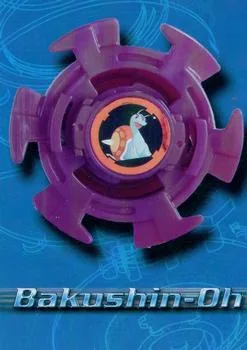
Pictured: Cards Inc. #48
Beyblade file · Plastic generation
Bakushin-ou
Bakushin'ou · バクシンオウ
Also known as Bakushinoh (Alternate official naming) / Bakushin-oh (Hasbro)
- Code
- 15
- Released
- November 1999 (Japan)
4
parts
2
cards across 2 games
Description
Bakushin-ou is a Defense Type Beyblade from the Original Series era, combining a triceratops-themed Bakushin-ou bit chip with a Down Force Ring attack ring, a Heavy weight disk and a Flat blade base. Its attack ring's downward-slanting protrusions were intended for upper attack but sit too close together to make solid contact, limiting its competitive value.
On file
The record
- Type
- Defense
- System
- 4 Layer System
- Series
- Next Generation Beigoma Battle: Beyblade
- Other code
- 15
- Price as printed
- 380円
- Released in Japan
- November 1999
- Japanese name
- バクシンオウ
- Romaji
- Bakushin'ou
- Also known as
- Bakushinoh (Alternate official naming) / Bakushin-oh (Hasbro)
- Owner (in the story)
- Chucky / Lippy / Zippy
Parts
- Bit ChipBakushin-Oh
- Attack RingDown Force Ring
- Weight DiskHeavy15.3 g
- Blade BaseFlat8 grams
Open in the builder Swap any part and watch the stats move.
Part by part
Parts in detail
A standalone plastics-era release with no recolors or reissues noted on the source page.
| Slot | Part | Weight | Spin | Note |
|---|---|---|---|---|
| Attack Ring | Down Force Ring | 3.5 g | Right only | A ring that was relatively wide for its time, with closely spaced angled fins whose short slopes give limited Upper Attack while their flat, exposed faces cause noticeable Smash Attack recoil; the thin fin design also makes it somewhat fragile. |
| Weight Disk | Heavy | 15.3 (weights vary noticeably between copies) g | The most compact weight distribution of any disk, offering some recoil protection despite its sharp corners, but both Ten Heavy and, more marginally, Eight Heavy outperform it. | |
| Blade Base | Flat Base | 6.5 g | Right only (built-in Spin Gear) | Its very low profile lets it slip under opponents, but the lack of Heavy Metal Core compatibility rules out Traditional Upper Attack use, and light weight plus weak grip limit both recoil control and flower-pattern movement. |
Weights are single copies weighed on their own; a part can vary by a few tenths of a gram.
Colours & Versions 4
2 recolours · 2 editions.
| Version | Kind | Colours |
|---|---|---|
| Black/Gold | Edition | Beyblade G Revolution VHS Vol. 1 Collector's Edition |
| Green | Recolour | Random Booster 1 |
| Yellow | Recolour | Random Booster 1 |
| Yellow | Edition | Limited Edition 2000 |
In play and in the story
Its Down Force Ring attack ring is judged largely ineffective: its slanted protrusions are meant to enable upper attack, similar in concept to the Metal Dragoon Bearing Stinger's Scissor Cutter ring, but their close spacing and number prevent proper contact, so it should not be used in place of a true upper-attack ring.
- Released in Japan in November 1999.
- Issued in yellow and green through Random Booster 1, in yellow for the Limited Edition 2000, and in black and gold with the Beyblade G Revolution VHS Vol. 1 Collector's Edition.
- The Hasbro release of its attack ring removes the original's upper-attack slopes.
Community testing, Oct. 13, 2011 — summarised
The competitive view
A downward-slanting ring meant to aid upper attack has protrusions judged too close together and poorly angled to make solid contact, ranking real upper-attack rings like Driger G's Triple Tiger and Dranzer GT's Triple Wing well above it. The Beyblade is considered to have no competitive use and is worth owning only for collecting.
Condensed from community testing; competitive opinions are the community's, not ours, and may be out of date.
In the card games
Bakushin-ou on cardboard
More from the 4 Layer System
-
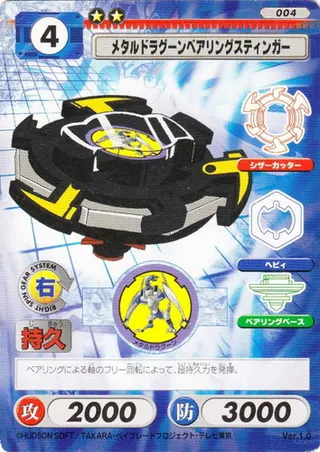 4 Layer System · 1999 Bearing Stinger Stamina · Takara Tomy
 - 4 Layer System · 1999 Bistool Balance
-
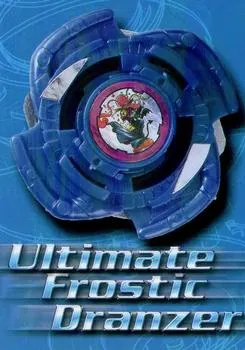 4 Layer System · 1999 Frostic Dranzer Balance
 -
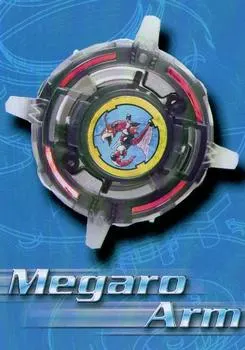 4 Layer System · 1999 Megalo Arm Attack
 - 4 Layer System · 1999 Polta Stamina
-
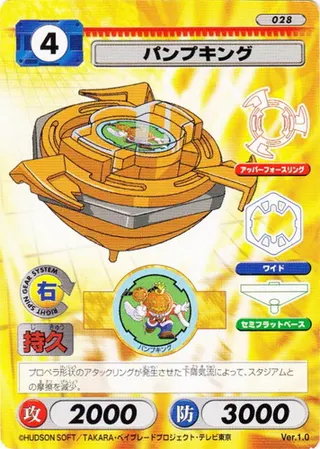 4 Layer System · 1999 Pumpking Stamina
 -
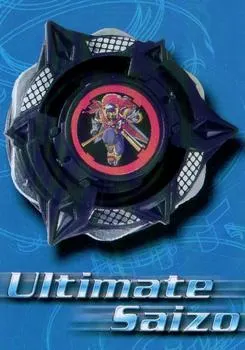 4 Layer System · 1999 Saizo Stamina · Hasbro
 -
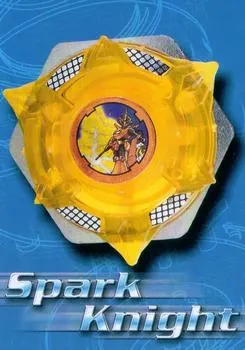 4 Layer System · 1999 Spark Knight Stamina
The price is the one printed at release, not a value today; nothing here is for sale.